Work in progress
Get the files
Help improve this design
If you teach math or run a STEM program, tell me whether a print like this helped explain chaos theory by touch, and what size worked best in hand.
This project is a work in progress. If you would like to test it, suggest changes, or help iterate, feedback is welcome on the model pages linked above. See the other works in progress for related designs.
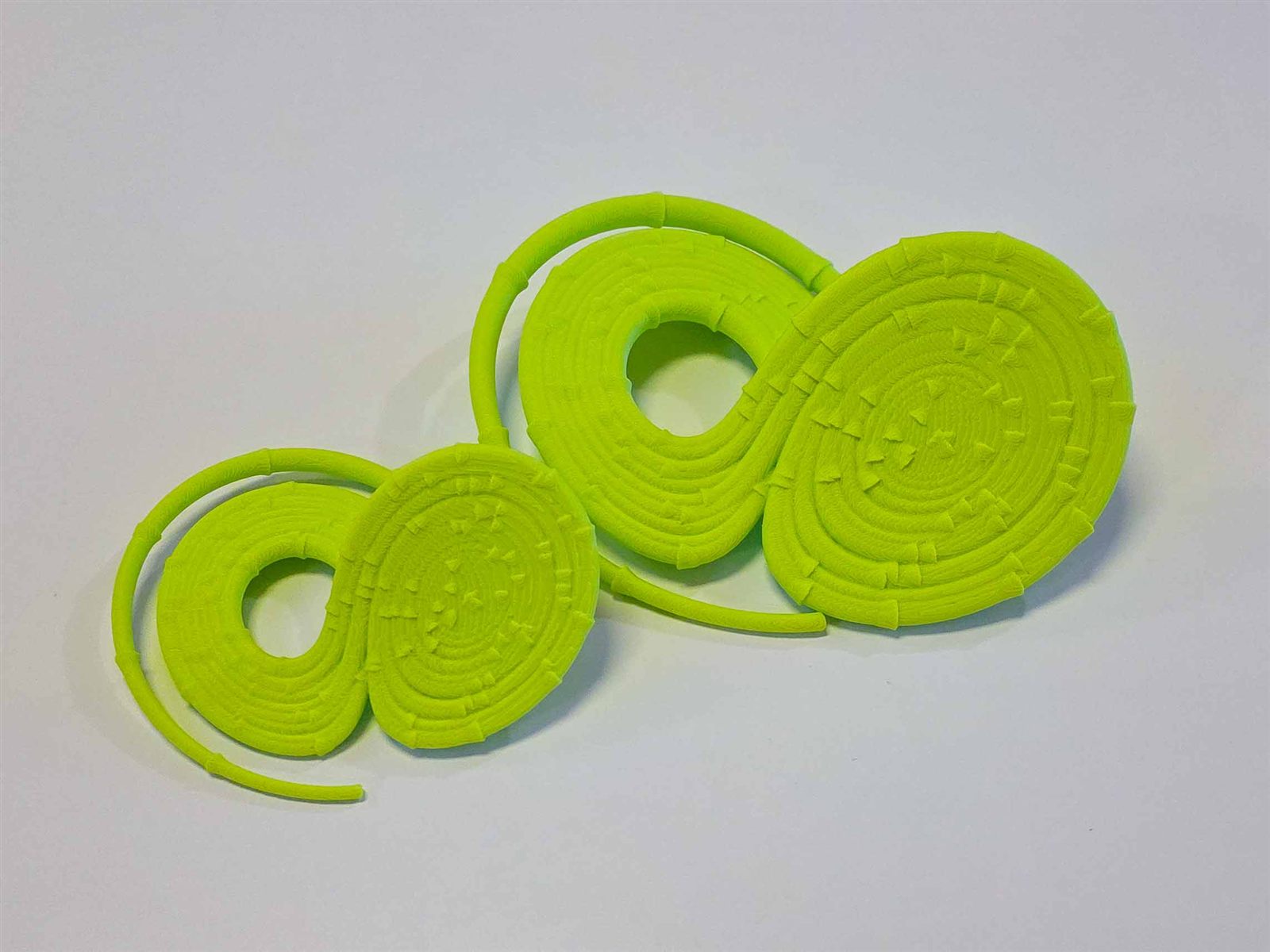
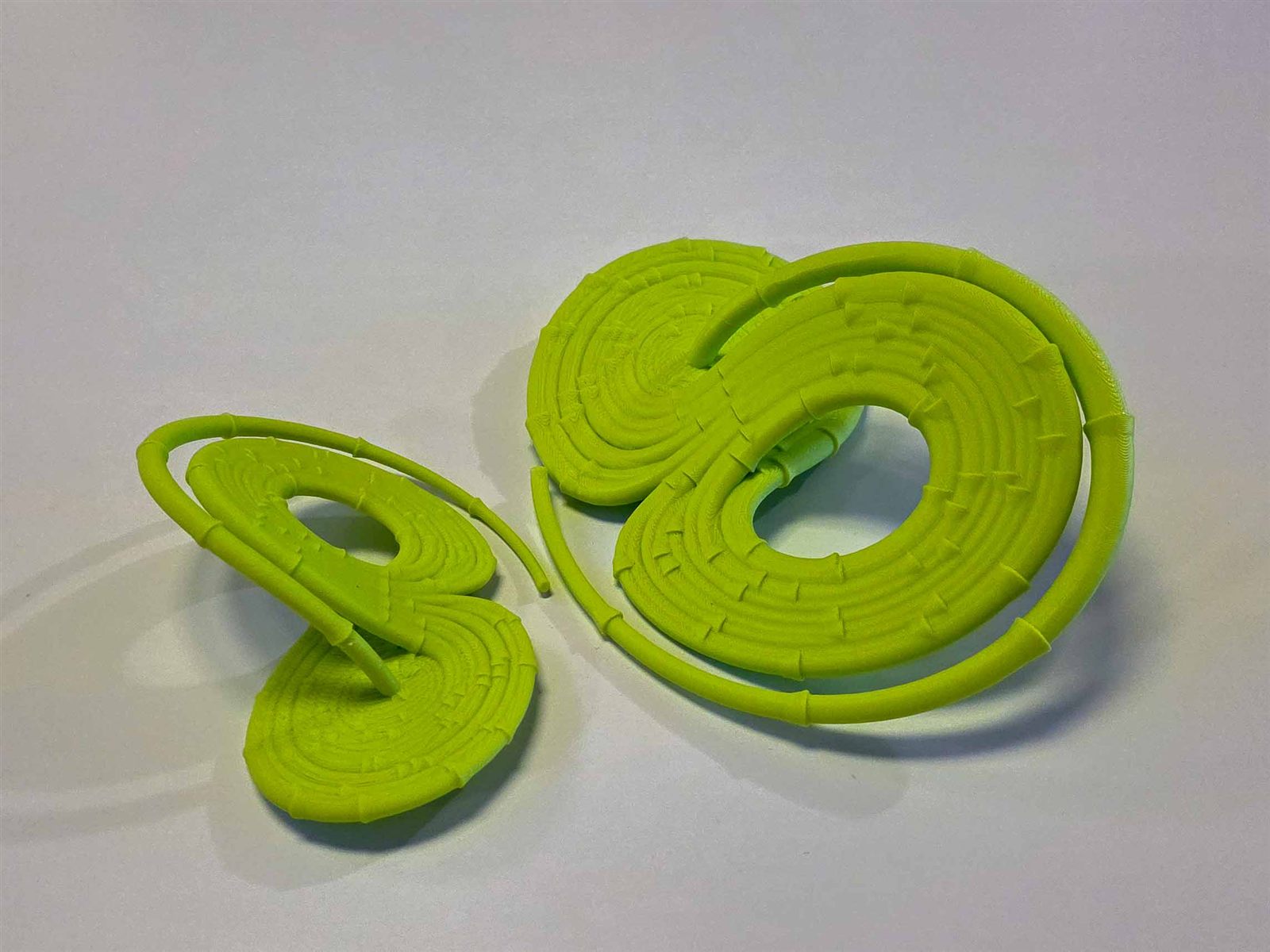
This is a 3D-printed Lorenz attractor, the famous butterfly-shaped curve from chaos theory, made to be read by touch. The source files hold two OpenSCAD models: a keyed tube that traces the curve itself, thicker where the curve is higher, with collars that show the direction of travel; and a branched-surface template, two joined wings with raised orbit lines and flow arrows. The photos show the template, printed at two sizes.
Printing a shape like this is a challenge in itself: the curve loops through open space in every direction, so these prints used dissolvable support material that washes away in water. The photos show them before and after the supports came off.
Unlike most projects on this site, this one is not a device for a specific task. It is a STEM and math education piece: a way for students to hold and trace a chaotic system by touch rather than only seeing it on a screen, which also makes it usable in a classroom or library for learners who are blind or have low vision.
Photo gallery
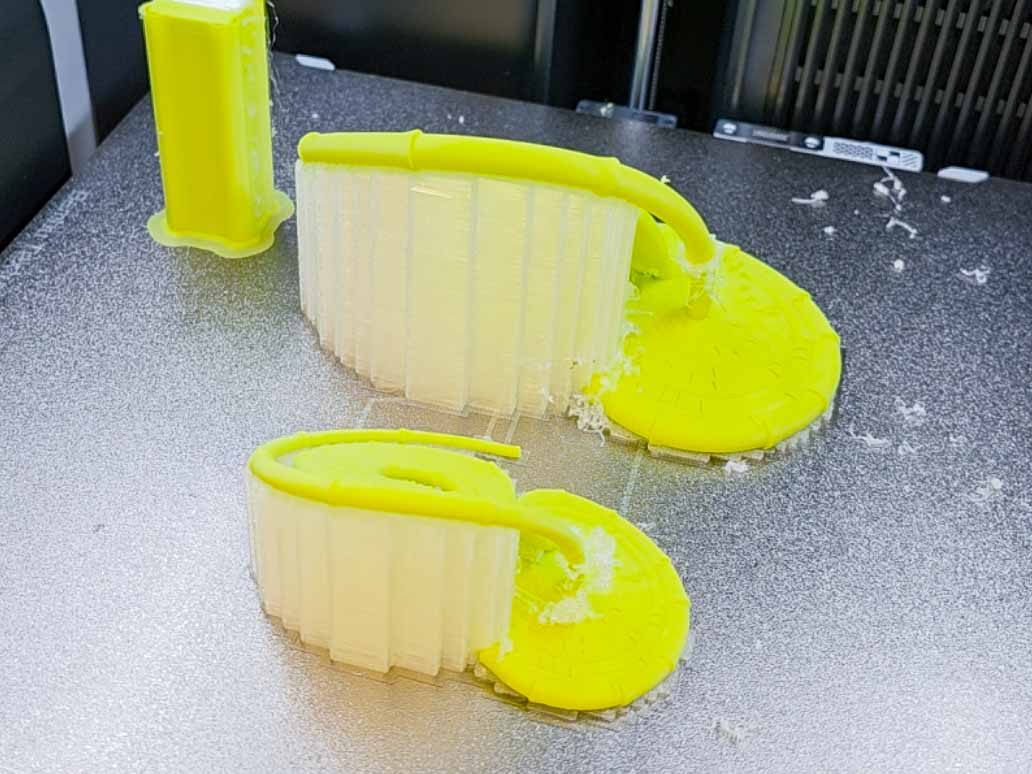
Fresh off the printer, with support material still attached.
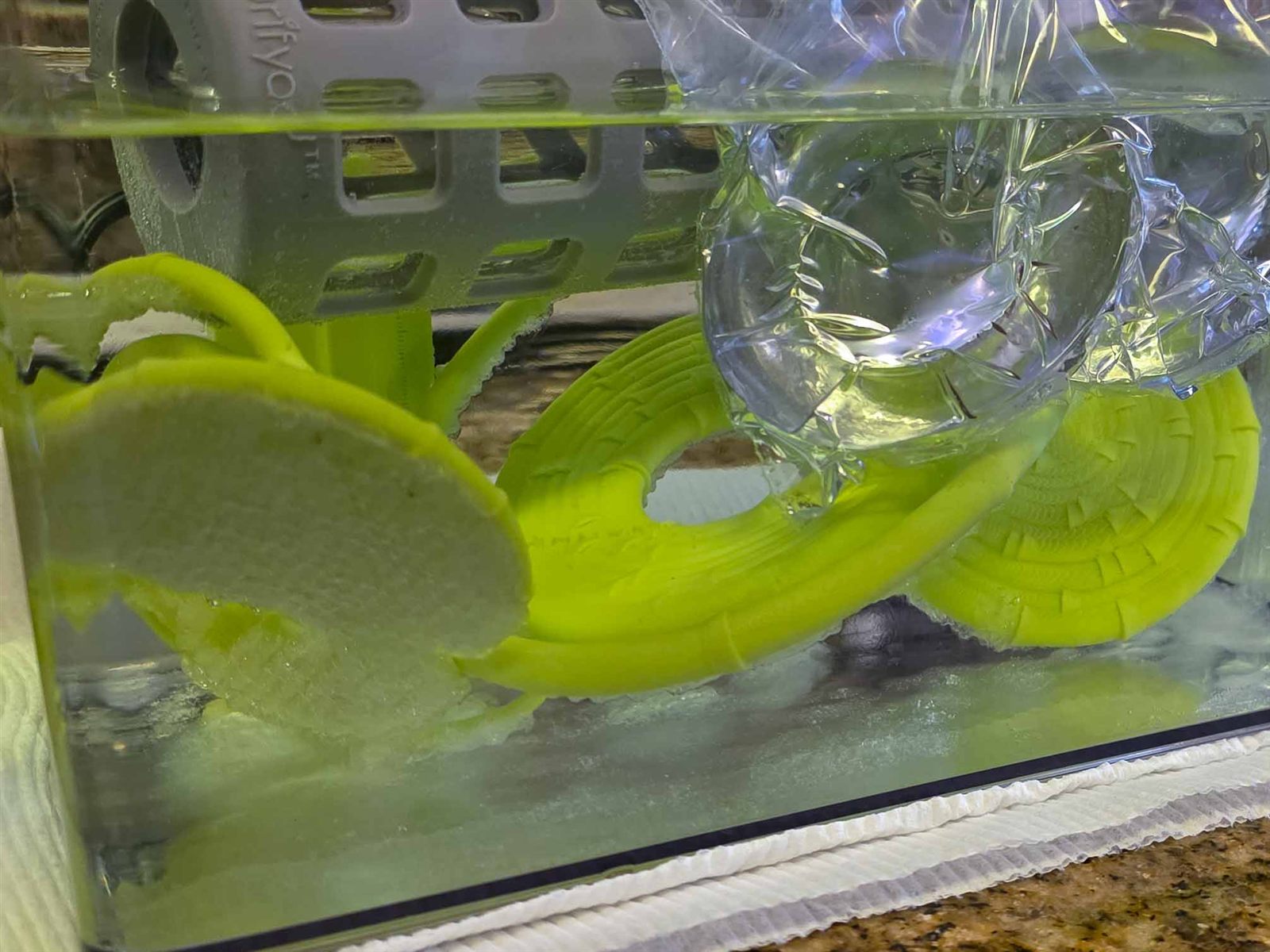
Dissolving the supports in water.